

I stood in front of a phone booth at the Heart & Soul SG60 Experience, about to speak with my “future self”. The AI-powered installation promised insights into who I’d become. Into what Singapore’s future would be like. I asked questions I didn’t have answers for: “What would I be doing in 5 years?” “How will my family be?”
I typed, there was a momentary pause, and the machine revealed its answers. But disappointingly, the responses felt impersonal. It mirrored my words without grasping their nuance. They were cookie-cutter, with no tenderness and depth. The answers tried to mimic my hopes, even my concerns, but couldn’t offer the warmth that comes from another human truly listening. Truly communicating.
If we begin confiding in machines for comfort and reassurance, what happens to the hope and ambition we can learn only from one another?
The question lingered as I moved through the rest of the exhibition, which used generative AI to reconstruct Singapore’s past and imagine its future. As I walked through the exhibition, scenes unfolded: kampung life, SARS, and Covid-19. Stories and voices from the past echoed through the space, complicating my initial disappointment.
Although the phone booth failed to create a connection, something else was happening.
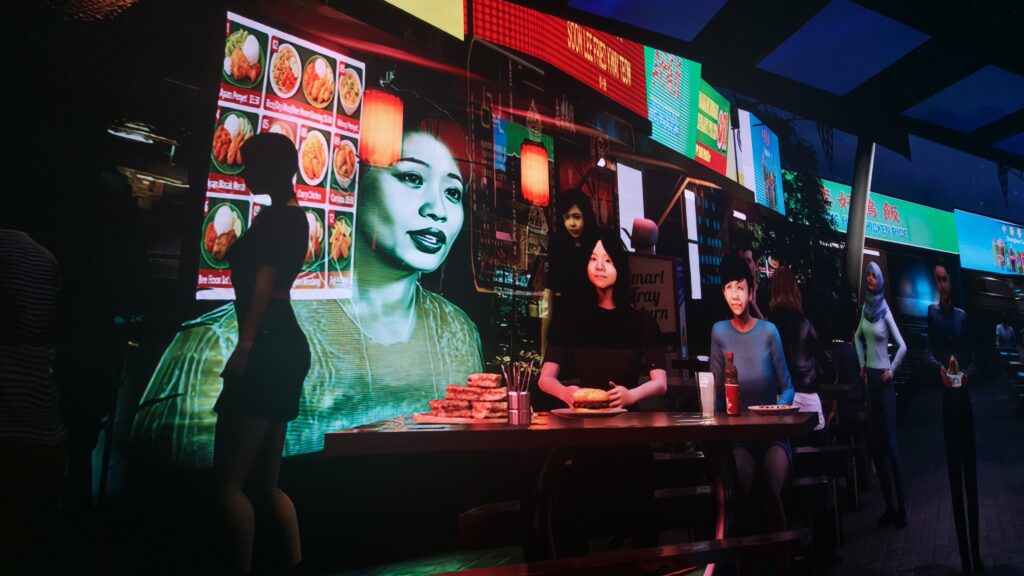
The emotion in the room didn’t come from the multi-sensory effects or how precise generative AI was in reconstructing Singapore’s past. It came from the participants. The people experiencing the exhibition. I witnessed children whispering to their parents, “Did this really happen?” Strangers stood side by side, quietly sharing moments of remembrance and imagination. The elderly looked on in awe and pride, ready and excited to share more with anyone willing to listen.
The exhibition, I realised, was more than a witness to “cool” technology. It created a bridge across generations. A space for reflection and conversations that continued long after people left.
It wasn’t the technology itself that was connecting us. Rather, it served as a way to invite people to remember together. To pause and allow for a medium and space to share their stories and reflect.
In quiet, whispered exchanges that I witnessed as I moved across the exhibition, I saw empathy emerge, not as something simulated, but as something witnessed between people.
When AI Falls Short
Deeper into the exhibition, I experience “Windows in the Sky”. It painted a serene, utopian future. Skyscrapers intertwined with lush gardens where families lived and played.
It was mesmerising yet strangely distant. This was the future I was supposed to relate to? It was too perfect. Too polished. The kind of future only a machine could imagine. It lacked the spontaneity and quiet chaos of irregularity that make life real.
Real connection happens in imperfection. In moments of struggle when people choose compassion over convenience. When we, as humans, choose to do what is right rather than what is expected. No algorithm can replicate that.
An expert from a CNA article warns that while AI chatbots may offer connection (or something that feels like one), relying on them too much could “erode real-life empathy and communication.” No matter how comforting and reliable a chatbot sounds, we mustn’t forget that it is programmed to be precise with facts and consistent in tone. But human empathy is never that straightforward. It’s something that takes vulnerability and trust that’s been built over time,
At an NUS Alumni event, Dr Tok, Associate Professor at the NUS School of Computing, said something that captured this tension: “Tools are only useful when you know how to use them wisely. And above all, don’t forget the human touch.”
What I Learned
I went into the exhibition in hopes of learning more about Singapore. To appreciate Singapore on its 60th birthday. But I walked away being taught something unexpected.
AI’s role isn’t to replace human connection. It won’t. Rather, it’s to create space for it to happen.
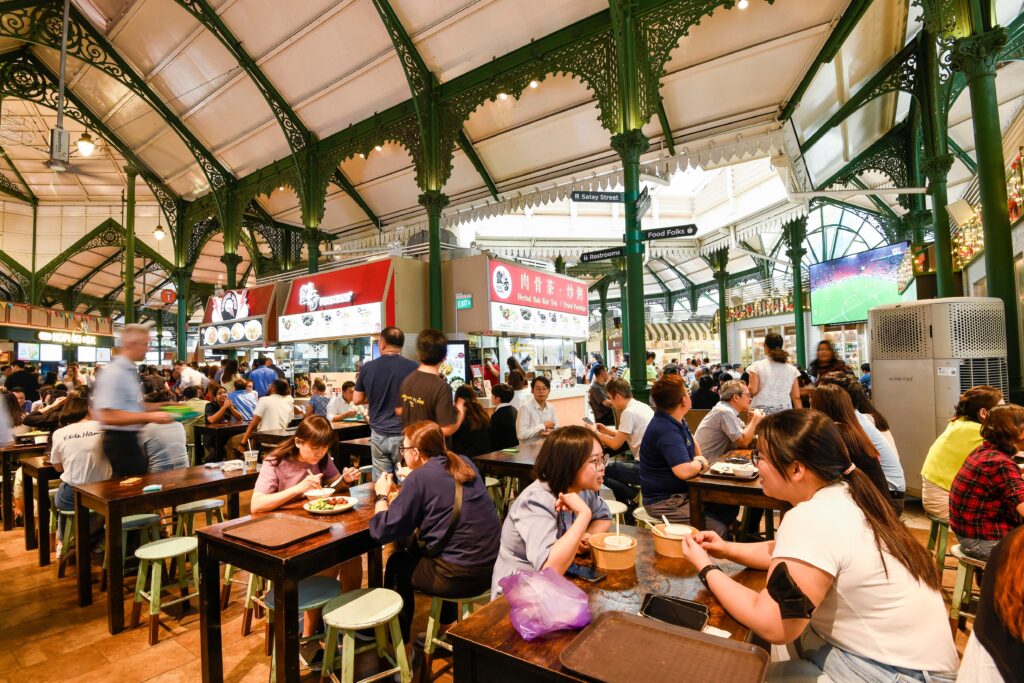
When scenes of Singapore’s past and future were played, the AI wasn’t what was responsible for making people feel and cry. Instead, it gave generations a shared language and visual anchor for stories that might otherwise be difficult to bring up in conversation. The technology wasn’t the point. The interactions and discussions it stimulated were.
When AI tried to be the connection, as with the phone booth, it failed. The responses were hollow because empathy isn’t about accurate predictions or language that mirrors us. It’s about being truly seen and understood by another person.
As we enter a stage where AI can not only replicate stories but also stimulate emotion, the real question isn’t how advanced it can become and how it’ll displace us. But instead, how deeply we choose to feel and experience life. AI may help us remember our past or suggest how our future would be, but it cannot teach us how to be present with each other. How to be empathetic and kind. How to be human.
The next time you encounter AI promising emotional connection, ask yourself: Is this creating space for human empathy, or trying to replace it? The difference matters.
In a world where AI is always going to be present, the kindness and empathy that uniquely belongs to us isn’t something to safeguard from technology. It’s something to practice with each other, everyday, in ways no machine ever could.
So be kind. Be greater.
What’s protecting kindness and empathy in the world of AI?
Share your thoughts with us



One Response
seeFrom a Singapore perspective, this concern is quite valid because when people lean too much on AI chatbots, they might slowly lose the habit of engaging in genuine, face-to-face conversations. AI can sound caring and steady, but real empathy in human relationships is messy, imperfect, and built through shared experiences over time, not instant responses.
Share your thoughts with us