
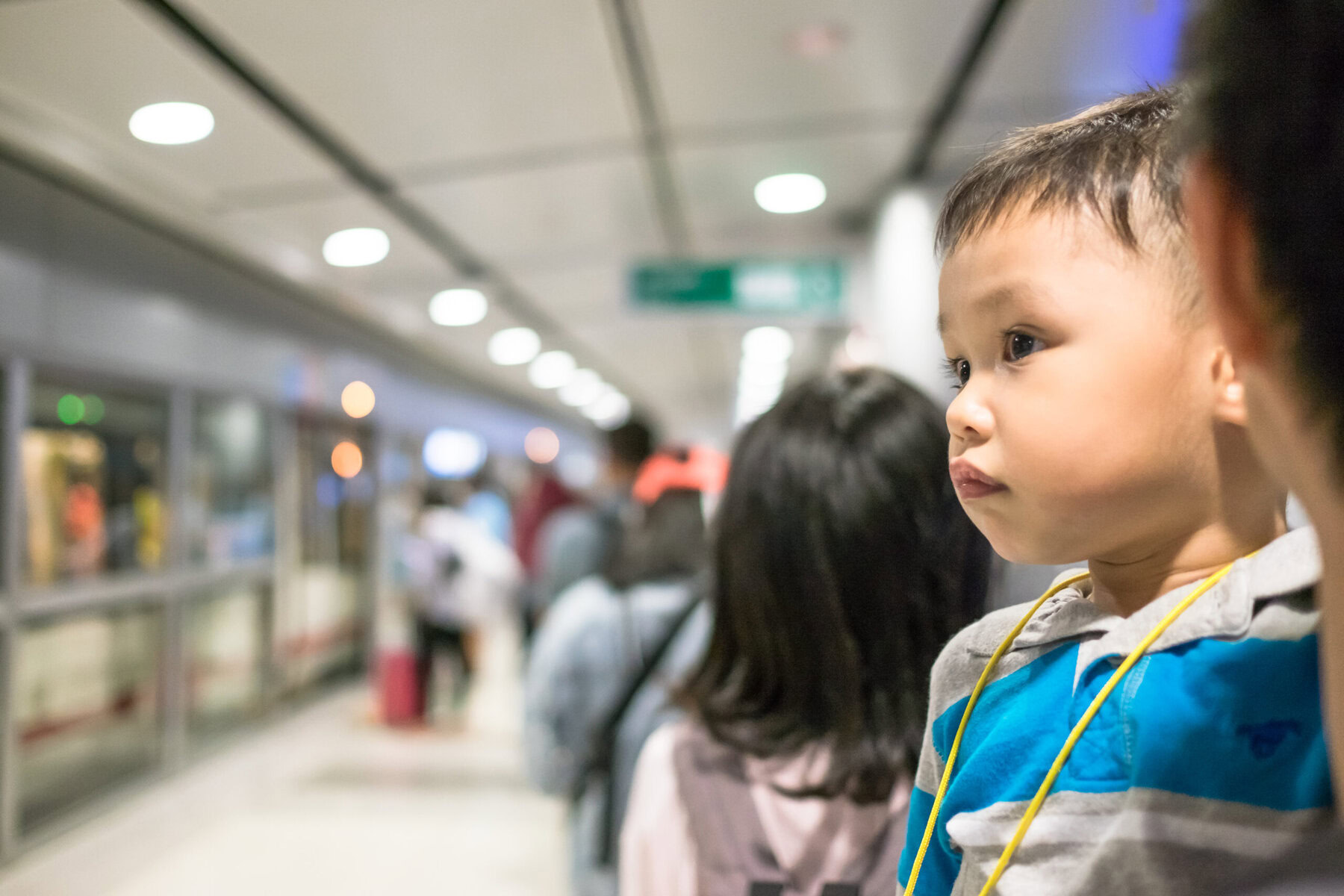
A recent video of an elderly man reprimanding a mother over her child’s disruptive behaviour on the MRT sparked widespread debate online. In the video posted on Facebook on January 13, the child is seen jumping around on the train while both adults engage in an argument, with the man questioning the mother’s parenting.
More than just a disagreement between two commuters, it became a reflection on how we navigate behaviour, responsibility and respect in shared spaces, and who gets to decide what’s acceptable.
Living by the rules
In Singapore, living together often means living by rules – some clearly stated, others quietly expected and understood. Reinforced since childhood, this social contract is shaped by consideration and restraint, especially in communal environments like public transport and void decks.
But these expectations are not experienced equally. Young children are still learning boundaries, testing limits, expressing emotions and figuring out how to exist alongside others. At the same time, adults are navigating growing pressures in their personal lives. In a fast-paced city, public spaces often double as moments of peace and refuge. As stressors accumulate, tolerance for noise and disruption appears to be thinning, and personal boundaries are often more enforced.
When these realities collide, tension is almost inevitable. In spaces that were made for everyone, where does well-intentioned intervention end, and unwelcome intrusion begin?
The weight of public blame
When people perceive children as disruptive in public, they often judge parents first and loudest. Strangers express their discomfort through public shaming, intentional or otherwise, even when it does little to resolve the matter. They stare, linger, or use harsh words like entitled, incompetent or disgraceful, placing the responsibility solely on the adult.
For parents already managing the situation, this public correction doesn’t help. It just adds another layer of judgment to navigate.
How parenting has changed
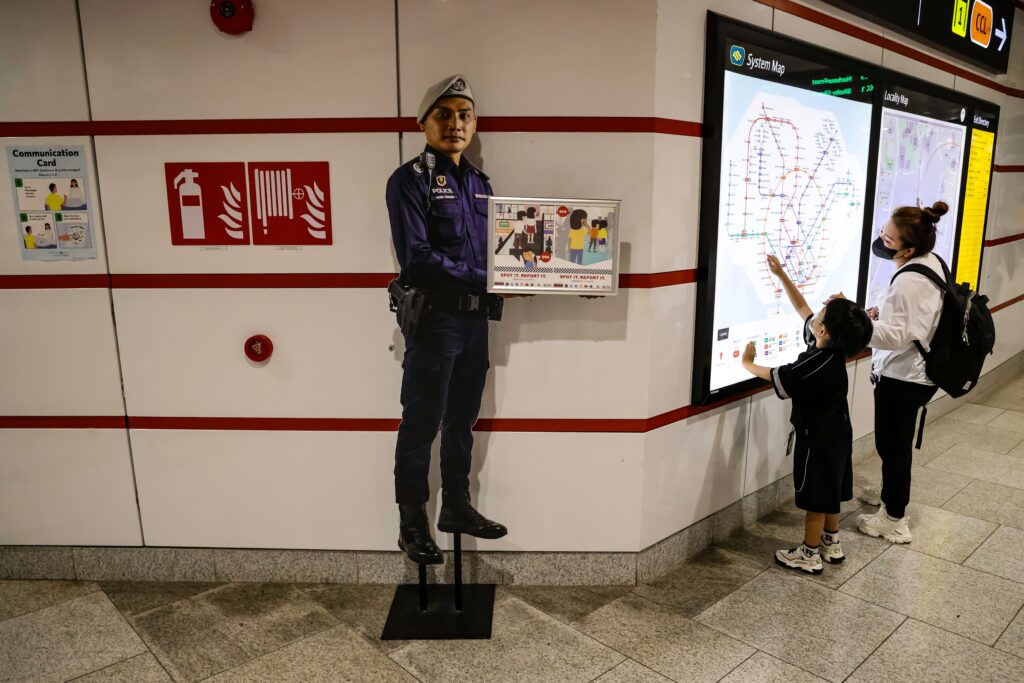
This wasn’t always the case. In the past, reprimanding a child who misbehaved in public was rarely questioned. Communal correction was almost expected, with strangers stepping in to discipline children, and parents viewing it as support rather than intrusion. Authority was shared, and boundaries were enforced collectively.
“I believe in the saying that it ‘takes a village to raise a child’,” shares Diana, a mother of four. “Family support is so important in raising children, and it is important for them to feel safe and comfortable doing that too.”
N, a mother of two, shares the same sentiment. “Personally, everyone in a child’s life plays a role in making it ‘whole’,” she says. “They are present to instill values, build confidence and to care for their emotional well-being. It extends beyond family members. Teachers and peers included.”
When the village changed
But the village has changed. The shift in parenting today sees parents taking on a more conscious approach, prioritising understanding over punishment, and emotional regulation over fear. While boundaries remain important, there is a growing desire to allow children space to express themselves, without immediate or public correction that may shame rather than teach.
“The term ‘It takes a village to raise a child’ was definitely practiced more literally,” Karun, a father, shares. “Parenting today has become more private, and boundaries around other people’s children are more defined. We need to find a middle ground that respects both the parent’s role and the community’s concern.”
From punishment to understanding
NS, a mother of two, reflects on how disciplinary methods have shifted across generations. “The older generation was probably used to harsher ways of correcting children. Physical punishment was often the easiest solution,” she shares. “I actively choose to understand what caused the behaviour before reacting.”
Similarly, N believes that the older generations “expect children to be on their best behaviour at all times.” As parents, N and her husband actively try to anticipate their children’s tantrums even before leaving the house. “Parents in this generation are more aware of the trauma and long-term effect if we were to scream at them in public before understanding the cause of their meltdown,” she says.
Research supports this shift. According to the National Institutes of Health, public shaming can damage a child’s self-esteem and doesn’t effectively teach appropriate behavior. Children learn better through calm, private correction that helps them understand the impact of their actions rather than just feeling humiliated.

SK, a father to a four-year-old, feels that public intervention, even when well-intentioned, can undermine a parent’s role. “Unless there is a risk of harm to my child or someone else, I don’t think strangers should step in,” he says.
Does the method matter?
Public opinion on the video remains divided, with some siding with the elderly man and others empathising with the mother. At the heart of the debate lies a deeper question: does the method of intervention matter more than the behaviour itself?
“There’s definitely a better way to go about reprimanding the mother,” NS shares. “The man could’ve spoken kindly to her, instead of raising his voice in public and causing further embarrassment.”
As a father, Karun echoes this sentiment. “Kind intervention starts with empathy, not accusation. The goal should always be to support, not to shame. The manner of intervention matters just as much as the intervention itself.”
An alternative way would have been for the uncle to approach the boy calmly, explaining the potential impact of their actions. “A friendly approach always works,” says Diana.
For others, context plays a crucial role. “It depends on how the situation escalated before the video was filmed,” NS notes. “If the child was potentially causing harm to himself or others, I think the reaction is warranted.”
But even when harm is a concern, how we express that concern shapes whether we help or hurt. In shared spaces, where emotions run high and context is often incomplete, good intentions don’t soften the impact of public confrontation. How we intervene can either de-escalate a situation or deepen the conflict, raising the possibility that people feel kindness, much like correction, most strongly in its execution.
What does intervention actually accomplish?

If the goal of public intervention is to correct behaviour, it’s worth asking: does it work?
From the parents’ perspective, the answer is clear. Public correction doesn’t teach the child. It humiliates them. It doesn’t support the parent but rather, it undermines them. And it doesn’t resolve the situation. It escalates it.
“Let us make the decision on how to discipline our child in public,” SK shares. “Trust that we know what we’re doing.”
What looks like a parent “doing nothing” might actually be a parent choosing not to engage in a power struggle in public, waiting for a calmer moment to address the behavior. What looks like permissiveness might be a parent managing a neurodivergent child’s meltdown, or someone at the end of a very long day making the best choice available to them in that moment.
Diana adds that context is often missing in these moments. “There are times when a parent is simply having a bad day, or has reached their limit after repeatedly reminding their child to behave. We never really know what’s going on beyond what we see, so it’s important not to judge.”
Reframing kindness in conflict
If intention alone is not enough, then the next question is what kindness actually looks like to those most affected by these moments.
For N, kindness begins with consent and tone. “Ask for permission. Talk to the child calmly, in a gentle voice. We can’t control when a meltdown happens or what mood our child is in. We’re all learning as we go.”
NS echoes this need for understanding, pointing to the emotional labour that often goes unseen. “Have a little more patience. Be less judgemental. We’re already trying our best when it comes to managing misbehaviour in public. Sometimes, offering help or giving us space, even just a look of empathy makes a big difference.”
The question we should be asking
Karun further reflects on how public encounters rarely tell the full story. “Parenting in public is a vulnerable act: doing one of the hardest jobs in the world, with an audience. In these moments, a little grace matters. And if there is an urge to step in, perhaps the question to ask is not whether to speak, but why. Whether it is to help build understanding, or simply to release frustration. One strengthens the community; the other quietly erodes it.”
As the people at the core of these encounters, these parents share that ultimately, what they hope for is not silence or blind tolerance, but empathy, kindness and a little more trust.
The elderly man on the MRT may have genuinely believed he was upholding community standards. But if those standards come at the cost of humiliating parents and children in public, perhaps the question isn’t just about behavior. It’s about what kind of community we want to be. One that corrects, or one that supports. One that judges, or one that trusts parents are trying their best with what they have at that moment.
Where do you draw the line between helpful intervention and unwelcome intrusion?
Share your thoughts with us




One Response
Parents should educate their spoild brats and keep at bay. No running and playing on the MRT
Share your thoughts with us