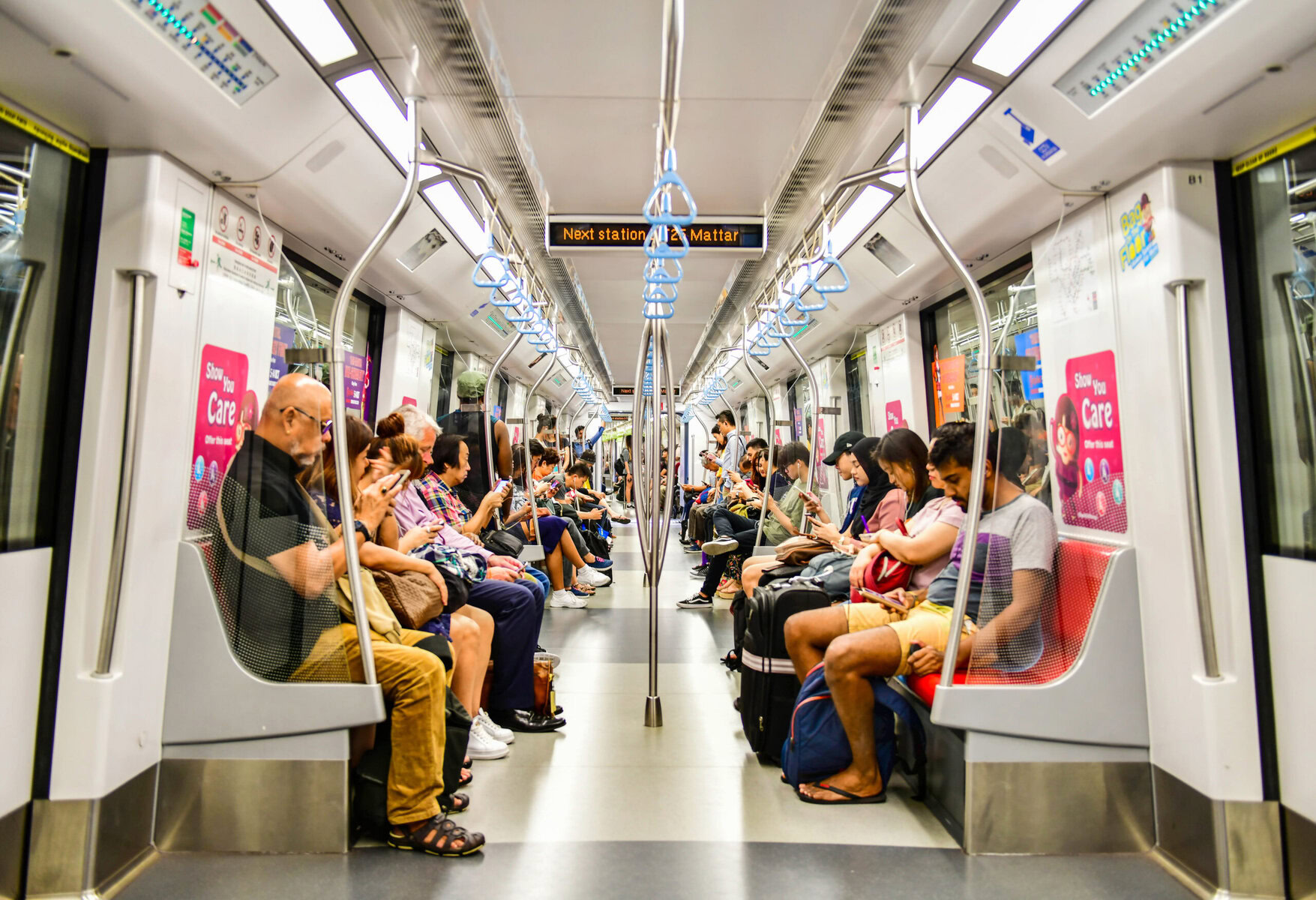
By most measures, Singaporeans believe in being gracious. According to a 2013 LTA survey, 94% of commuters, say they would give up their seats to those who need them more. In 2019, The Straits Times reports that 88% see it as a simple act of everyday kindness. But beyond the statistics, the reality on our trains tells a more complicated story.
Are You Entitled To The Seat?
In recent years, several incidents involving priority seats have surfaced online, often sparking heated discussions among commuters. In one instance, a pregnant woman shared a video of her experience on the MRT, where she felt ignored by fellow passengers. It garnered about 480,000 views with over 1500 comments.
@kati_on_air This is not the first time that happened. And it is usually the women who offer their seat eventually, never the men especially not young men. #singaporemrt #pregnant ♬ Tiny Workshop – Creative Time – Shinoa
The conversation that followed reflected a range of perspectives. Some empathised with her situation:
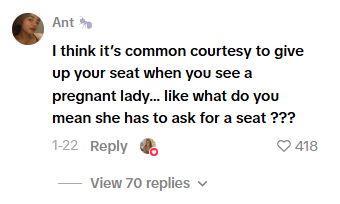
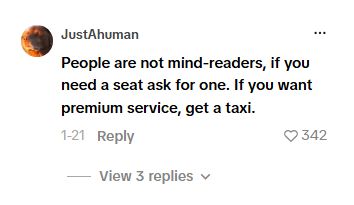
While others questioned whether she could have simply asked for a seat:
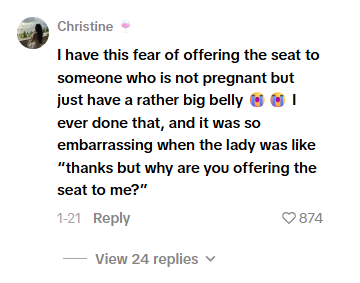
Others brought up the social awkwardness in navigating this situation:
“I don’t mind giving up my seat, but sometimes people act entitled to it just because they are older,” shared Sam, 25. She recalled an incident where an elderly woman nudged her with her foot while she was taking a brief nap in a priority seat. The gesture caught her off guard and felt unnecessarily rude, leaving her more frustrated than willing to respond.
“I would be more inclined to give up my seat if people just asked nicely, instead of judging me for being there in the first place,” she said.
“I try to avoid the priority seat as much as I am able to,” said Zosha, a yoga instructor. “It’s easier to just avoid that potentially awkward exchange with other strangers. After a long day at work, I just need a little bit of peace before heading home, whether I get a seat or not.”
Kane, a new mother, shared an incident that happened during her commute home. Although she was visibly pregnant, an elderly man boarded the train and immediately demanded that she give up her seat.
“I didn’t want to engage in an argument, so I stood up,” she said. “While I understand that the uncle may have needed the seat more than me at that time, I felt more disappointed with the other commuters who didn’t bother offering their seats just because they weren’t sitting in the priority seat like I was.”
While the way people demand seats discourages some commuters, others experience a different kind of frustration: having to ask at all. For elderly passengers who rely on public transport daily, the journey itself can already be physically taxing. Having to request for a seat can feel uncomfortable, even undignified, especially when the need may seem obvious to them.
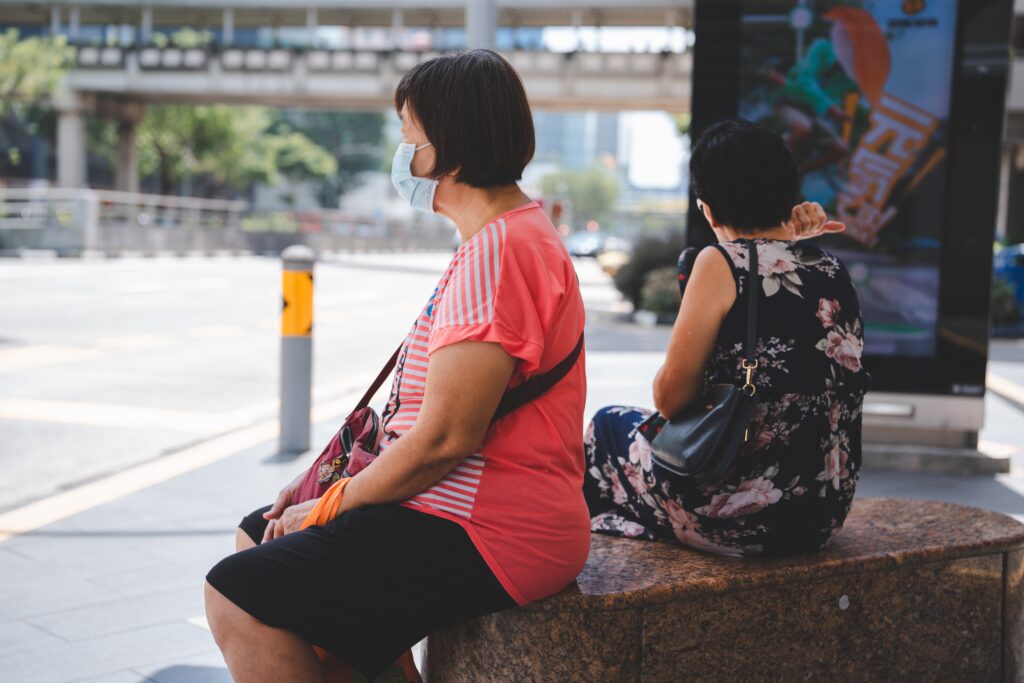
“I am old and I am tired. Most of the time, I just want to sit,” shared Mr Tan, an elderly commuter in his 60s. “I just need younger people to recognise that and offer the seat without needing me to tell them.”
The Priority Seat: A Gatekeeper to Graciousness
In this day and age, the signage printed above the priority seat has taken on an unintended role. It has become a kind of gatekeeper for when commuters feel responsible for offering their seats.
“I think people take the priority seat stickers too literally,” said Nat, 32. “Just because you’re sitting on a ‘normal’ seat, doesn’t mean you get a free pass to ignore those who obviously and visibly need it more. You should still know when to give up your seat if someone clearly needs it.”
For Marc, a father of two, the issue often comes down to awareness.
“The problem is that everyone is on their phones all the time,” he shared. “People hardly look up, so they don’t notice when someone else might need help.”
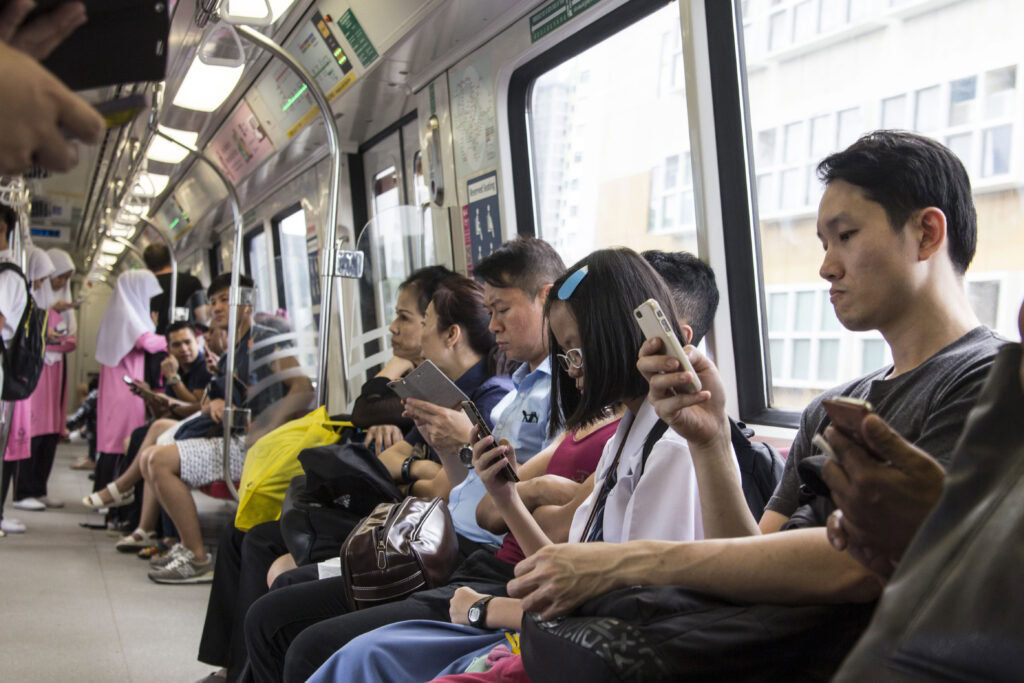
On one MRT ride, Marc found himself juggling two restless toddlers during the journey. As he entered the cabin, he noticed a man seated in the priority seat, absorbed in his phone. At first, Marc hesitated to approach him, aware that someone’s need for a seat may not always be visible.
But as the toddlers grew increasingly restless, he realised the man appeared able-bodied and was simply scrolling through TikTok.
That was when Marc decided to ask if he could have the seat.
“No sorry, no excuse me, there wasn’t a sense of graciousness at all,” said Marc. “I was annoyed, but at that time, the need to settle my kids was more important, so I let it go.”
At first glance, the situation may seem resolved — someone gave up the seat. But for Marc, that wasn’t the point.
“It’s the fact that he chose to be unaware of those around him, even while sitting in a seat meant for someone who might need it more,” he shared. “All it would have taken was for him to look up from his phone just once to notice that someone else was struggling. Even if it wasn’t me, I’d hope people could be a bit more aware of their surroundings, especially during peak hours.”
While the stickers serve as a reminder to the public, the need for them points to a much larger issue at hand: Have we regressed into an apathetic society in this day and age?
Beyond The Seat: A Kinder Society
The idea of a gracious society begins with being conscious of others. At its core, graciousness is not about following rules printed above a seat, but about noticing the people around us and choosing to respond with empathy. It is not passive, nor automatic. It is a deliberate, everyday decision.
“As an able-bodied person, I hope to be given the same graciousness that I am expected to provide others with. I don’t think it’s something out of the ordinary to request for,” noted Nat. “It’s as simple as approaching with kindness, and understanding that everyone has their own issues they’re dealing with, whether visible or not.”
For Mr Tan, that awareness can be as straightforward as action. He suggests that “younger ones be more proactive in giving up their seat, especially when they see an elderly on board.” While this may come across as expectation to some, it also reflects a deeper hope: that people do not have to ask for consideration.
Across these encounters, the issue was rarely about who sat where, but how people treated one another. Many agreed that stricter rules are unlikely to resolve the tension.
“Creating new rules in our society might end up being a double-edged sword,” reflected Zosha. “While it provides a guideline on how to act in public, it might also create situations where people only act when told to, which might eventually lead to a more apathetic society.”
“There’s no point in creating more rules to adhere to,” added Marc. “If people aren’t choosing to be aware of those around them, it just becomes another form of pressure, whether it’s fear of being fined or judged.”

Ultimately, there may never be a perfect solution to this. But perhaps that was never the point. In a shared space like public transport, graciousness cannot be enforced, only chosen. It lives in the small, often unnoticed moments: a glance up, a seat offered, a request made kindly. And in those moments, between one stop and the next, we decide the kind of society we want to be.
What’s stopping us from giving up our seats?
Share your thoughts with us